For years, BINT, short for Blessings in No Time, spread rapidly through churches, social media, family circles, and community groups, promising participants an opportunity to turn a relatively small investment into life-changing money. Instead, it became one of the largest pyramid schemes in recent U.S. history, leaving thousands of victims with devastating financial losses.
Unlike traditional investment scams that promise high returns from stocks or cryptocurrency, BINT relied almost entirely on recruiting new members. Participants were told that by contributing $1,400 to join a “blessing circle,” they would eventually receive $11,200 after moving through different levels of the program. The money, however, did not come from investments or business profits. It came solely from the payments of new recruits.
How the Scheme Worked
The BINT system was organized into four levels:
Earth – New members entered by paying $1,400.
Wind
Fire
Water – Members reaching the center were promised an $11,200 payout.
Once someone at the center collected the money, the circle supposedly split into two new circles, requiring even more people to join. The process repeated endlessly.
The fatal flaw was simple mathematics. Every person who received a payout required eight new participants beneath them. Those eight required sixty-four more. Then 512. Very quickly, the number of new recruits needed became impossible to sustain.
As with every pyramid scheme, the vast majority of participants inevitably lost their money.
The People Behind BINT
Federal investigators identified LaShonda Moore and her husband, Marlon Moore, also known as DJ ASAP Dre, as the leaders of the nationwide operation.
According to prosecutors, the couple aggressively promoted BINT across the United States, presenting it as a community-driven wealth-building opportunity rather than an illegal investment scheme. Promotional events, online meetings, and social media campaigns encouraged members to recruit friends and relatives, creating an atmosphere where skepticism was discouraged and urgency was emphasized.
Authorities estimated that the operation collected between $25 million and $30 million from approximately 8,000 to 10,000 participants.
Why It Was So Convincing
Many victims did not view BINT as a scam.
Instead, they believed they were participating in a financial empowerment movement built on trust and mutual support. Recruiters often targeted people they already knew—family members, church friends, coworkers, and neighbors.
The scheme’s success depended on social pressure.
Participants who had already invested their money had a powerful incentive to recruit others in hopes of recovering their own investment. This created a cycle where victims unknowingly became promoters.
Federal Investigation
As complaints increased, federal investigators began tracing the movement of funds through bank records, payment apps, and electronic communications.
Prosecutors concluded that BINT was not a legitimate investment program but a classic pyramid scheme that relied entirely on constant recruitment.
Participants near the top collected substantial payouts, while those entering later had little chance of recovering their money once recruitment slowed.
Sentencing
In June 2026, a federal judge in Texas sentenced LaShonda Moore and Marlon Moore to 40 years in federal prison after they were convicted of conspiracy to commit wire fraud, multiple counts of wire fraud, and money laundering.
The sentences reflected both the scale of the fraud and the enormous financial harm inflicted on thousands of victims.
Warning Signs of a Pyramid Scheme
Consumers should be cautious of any opportunity that:
Requires an upfront payment to participate.
Pays members primarily for recruiting others.
Promises guaranteed or unusually high returns.
Has no legitimate product or service generating revenue.
Encourages participants to recruit family and friends.
Claims it is “not a pyramid scheme” while relying on endless recruitment.
Lessons from BINT
The BINT case demonstrates that financial fraud continues to evolve, often hiding behind messages of community, empowerment, or mutual assistance rather than traditional investment language.
While technology made it easier for organizers to recruit thousands of participants nationwide, the underlying model remained the same one that has fueled pyramid schemes for decades: early participants profit only if enough new people continue joining.
Eventually, recruitment slows, the money stops flowing, and the vast majority of participants are left holding the losses.
The BINT investigation serves as a reminder that whenever profits depend primarily on recruiting new members instead of selling legitimate products or services, the business model is almost certainly unsustainable—and may be illegal.
The Pyramid Scheme That Changed MLM Law Forever: The BurnLounge Case Explained
Most people have never heard of BurnLounge. Yet if you’ve ever wondered how regulators decide whether a multi-level marketing (MLM) company is legitimate or an illegal pyramid scheme, BurnLounge is the reason.
The company’s collapse led to one of the most important court decisions in MLM history. More than a decade later, the case is still cited by attorneys, regulators, and even MLM companies defending themselves.
What Was BurnLounge?
Launched in 2004, BurnLounge marketed itself as an online music business. Members could buy digital music, create personalized music stores, and sell songs to customers.
But there was another side to the business.
Participants were encouraged to purchase expensive business packages costing hundreds of dollars and recruit others to do the same. Those who recruited new members earned commissions, creating a strong financial incentive to focus on recruitment instead of retail music sales.
The Federal Trade Commission argued that the real product wasn’t music—it was the opportunity to recruit new participants.
Why the FTC Took Action
In 2007, the FTC sued BurnLounge, alleging it operated as an illegal pyramid scheme.
The government argued that:
Most income came from recruiting new members rather than selling music to the public.
Participants purchased business packages primarily to qualify for commissions.
Retail music sales played only a minor role in the company’s revenue.
BurnLounge countered that it sold legitimate products and that distributors simply had the option to build a sales organization.
The courts ultimately disagreed.
The Landmark Ruling
In 2014, the U.S. Court of Appeals for the Ninth Circuit affirmed the lower court’s ruling.
The court established an important principle that continues to shape MLM law today:
A company cannot rely on the existence of a real product if participants are primarily paying for the right to recruit others.
That distinction became the legal framework regulators continue to use when evaluating MLM businesses.
Why This Case Matters Today
Before BurnLounge, there was significant debate over where to draw the line between direct selling and pyramid schemes.
The BurnLounge ruling clarified several key points:
Simply selling a legitimate product is not enough.
Compensation must be driven primarily by genuine retail sales.
Recruitment incentives cannot be the main source of earnings.
Courts will examine how the business actually operates—not just what its marketing materials claim.
These principles continue to influence investigations into MLM companies across the United States.
The Herbalife Connection
Ironically, BurnLounge’s defeat later became a valuable legal precedent for another major MLM company.
During the FTC’s investigation of Herbalife, legal analysts and attorneys repeatedly referenced the BurnLounge decision because it provided the clearest judicial explanation of what separates a lawful MLM from an illegal pyramid scheme.
Rather than hurting Herbalife’s defense, the BurnLounge ruling gave both regulators and the company a common legal standard to analyze the business model.
Whether one believes Herbalife passed that test remains a subject of debate, but there’s little disagreement about BurnLounge’s importance as a legal benchmark.
Lessons for Consumers
The BurnLounge case offers several warning signs consumers should consider before joining any business opportunity:
Are participants encouraged to recruit more than they are encouraged to sell products?
Are expensive starter packages required to earn meaningful commissions?
Is there strong retail demand from customers who are not participants?
Would the business survive if recruiting stopped tomorrow?
If recruitment appears more important than serving customers, the business deserves closer scrutiny.
Why BurnLounge Still Matters
BurnLounge disappeared years ago, but its influence lives on.
The case reshaped how courts evaluate MLM companies, influenced future FTC enforcement actions, and remains one of the most cited legal decisions involving pyramid schemes.
For anyone researching direct selling, network marketing, or consumer protection, understanding BurnLounge isn’t just a history lesson—it’s the foundation of modern MLM law.
Suzannah was a godsend who turned out to be a perfect sales rep and event organizer for our fledgling startup. Originally from Charleston, she carried the charm of a refined Southern hostess and a transcending smile of an elegant beauty queen. She arranged a meetup with Biergarten Haus, a German beer garden on the newly revitalized H Street corridor known locally as the Atlas District. Suzannah reached out to Arturas “Jeepo” Vorobjovas who also co-owns the Russia House in Dupont Circle.
“Have you googled your restaurant lately?” Suzannah asked. “Your online reputation can either be an asset or a liability, and we’re here to help.”
“Germans love their pilsners and already flock to our beer gardens. Our reputation is flawless.”
“But there are so many beer aficionados, who are not familiar with the art of drinking Bavarian beer. We’re here to make the introductions.”
Jeepo was easily persuaded by Suzannah’s charm and got her in touch with Ali Loo, the general manager who agreed to provide free food for our event.
Now the difficult chore of attracting people fell squarely on my shoulders. I immediately visited the Meetup website and noticed the D.C./Metro Area Reddit group was hosting an Oktoberfest event and searching for a venue. I contacted them, and they agreed to co-host the event with us as long as we would share with them our favorite Subreddit group.
“Beer Drinkers!” I answered enthusiastically. “And German beers reign!”
The Biergarten prosts German brews by the stein. And since the beer drinker’s paradise is home to over 200 yeast strains, 40 sorts of malt, and 100 different hops, there’s a different taste for every day for the rest of your life.
The Biergarten is beyond spacious. There are three bars spread throughout the entire grounds: outdoor, indoor, and on the rooftop all with phenomenal views. There was floor-to-ceiling vintage art decor that brought back fond memories of fun times at a Stuttgart beer hall. German -enthusiasts sat beside long, rustic wood tables, while many held foot-tall beer steins congregating around repurposed bourbon barrels. Outside an oompah-pah band played traditional Oktoberfest music and women in blue polka-dotted dresses danced the Schuhplattler. Ali brought out the pork knuckle served in a puddle of malty beer gravy. The lip-smacking rich meat wrapped in a golden sheath of crackling easily fell off the bone. It was the perfect dish that served a large, rambunctious group of techies in a boisterous beer hall.
Suzannah raised her stein to Ali and me. “What a lively event, kudos on our first one together.”
“Danke schön,” I replied. “I picked up a phrase here and there at my last duty station in Stuttgart.”
“Well I know no Deutsch, but my Grandma was born and raised in France, and she made sure we spoke it fluently.”
“Super, maybe you should visit Bistrot Du Coin in Kalorama for our next event. We can all mingle over Foie Gras.”
“That’s quite a hike. There’s nothing French in the Atlas District?”
“Unless you consider Louisiana French?”
“Absolutely, Cajun is a combination of French and Southern cuisines, which is kind of like me, since I’m a Carolina girl with French descent.”
“True dat. Well, there’s TruOrleans, the new Cajun restaurant on the west end.”
The following week, I met with James “Tru” Redding who just opened his bi-level Cajun restaurant just over the H Street Bridge. Redding is also a partner in Arlington’s Sushi Rock and Dupont Circle’s Public Bar and Lupe as well as Landover’s Stadium Club, a steakhouse and strip gentlemen’s club.
The previous tenant was a run-down radio station where Petey Greene, the legendary ex-convict turned radio talk-show host, worked and was instrumental in calming the people of D.C. in the aftermath of Martin Luther King’s assassination.
Today, the building is beautifully renovated with exposed bricks and an airy New Orleans-style veranda giving it an authentic French Quarter vibe. A sign painted on the side of the building shows a retro-looking advertisement for ginger mint julep.
Tru Redding met me at the patio and gave me a spirited tour of his new digs. I admired all the wall art that Redding picked up from Bourbon Street, reflecting the character and soul of the Big Easy.
We sat upstairs on the veranda enclosed by ornate wrought iron railings with a commanding view of the Capitol. Overhead, large fans rotated above us, ushering in a cool breeze. He offered me an Abita Purple Haze, and we sat down by a stained-wood table with bottles of Tabasco sauce and “Slap Ya Mama” Cajun seasoning.
“So what made you open up a Cajun restaurant in D.C.?”
“During a local golf tournament, I met the East’s, a third-generation Louisiana family who invited me to a duck hunting trip in the Creole Nature Trail. After a long day, we would return to their family home where they would cook up a storm. It was the best Cajun-Creole food I’ve ever tasted – not the fancy stuffy you find in the French Quarter. And after that, I was on a mission to bring back a slice of N’awlins to the Nation’s Capital.”
“Has everything gone as planned?”
“We made a lot of mistakes. We opened up way too early and there were disruptions in service and food. We need to reach out to folks who were not pleased with our services and give us a second try.”
“Do ya’ll think H Street is ready for a block of the Big Easy?”
“We certainly do. We want to be good neighbors, though, and we hope that we can bring the right balance of Mardi Gras festivities while being courteous and considerate of our neighbors. Hopefully, they will see us as good citizens, and we need your help in spreading that message.”
The following month we co-hosted “The Taste of TruOrleans” with Eventstir, a crowdfunding platform for events, and over a dozen people met up at the patio to devour D.C.’s best Cajun-style cooking.i
We parked the pedicab outside and foodies piled in to devour pistolettes, andouille-studded gumbo and crawfish étouffée, jambalaya, and gator tenders, compliments of Chef Andre Miller, a Ruth’s Chris Steakhouse alumnus.
Both Wayne Manigo, a local entrepreneur and comedian, and I were enjoying the Abita Purple Haze beer on tap.
“I want to go back to the people of N’awlins and thank them for the birth of their food,” said Wayne
“And I want to them for their interesting cocktails and stiff drinks. The Sazeracs really pack a punch,” I said. “Wanna try the Hurricane next?”
“How strong do you want it? They range from a mild level 1 to gale force 3 which is topped with Bacardi 151-proof rum,” the bartender said.
I squinted back at him and made a confused face, and the bartender immediately knew which one to pour.
“So what’s the next project Chef?” I asked.
“We hope to be serving breakfast soon with beignets and jambalaya-stuffed biscuits.”
“Laissez les bons temps rouler.”
Suzannah was the perfect adventurer in discovering and enjoying new cuisines. She was someone who could make something as benign as eating crepes look attractive. And beyond the bountiful platters of beef bourguignon and chocolate soufflé, she maintained her stunning, hourglass figure like Raquel Welch.
It definitely helped that she was an ardent fan of cardio, and she kept reminding me of the importance of cutting back on drinks and staying active.
“C’mon Chito, you’ve been drinking too much Abita. It’s time to work it out.”
If we weren’t walking to restaurants, we were sprinting to them and often joining other casual joggers around the expansive (National) Mall. D.C. happens to be one of the best cities for runners due to its walkability and abundant access to parkland.
In one of our weekly rituals, we crossed paths with the Marine Corps Marathon runners at the Rock Creek and Potomac Parkway by the glamorous Kennedy Center for the Performing Arts. We enjoyed making small talk with other runners and meeting new friends along the way just like we did at neighborhood restaurants.
As we approached the scenic Hains Point peninsular, we saw hundreds of volunteers in blue, waving American flags with tribute posters commemorating the fallen. What an inspiring and emotional way to honor and remember those who made their ultimate sacrifice. I knew I would be sweating today, but no one told me that I would be weeping also.
I was honored to meet Monica Velez who lost two brothers—one in 2004 in Iraq and one in 2006 in Afghanistan. She was running her first marathon to raise money for TAPS, a non-profit organization that helps families nationwide cope with the deaths of their fallen soldiers.
Left-Right: Freddie, Monica, Andrew Velez
Corporal José “Freddy” Velez was killed in action in Fallujah in 2004 and was posthumously awarded the Silver Star.
“Oct 31st, 2004 was the last day we spoke to Freddie. His final words to us are, ‘Be Strong, Don’t Give Up.’ Still holding on to those words and that moment.”
Specialist Andrew Velez had the difficult task of escorting his brother’s body back to the United States. Two years later, he committed suicide in Afghanistan.
“Tell me more about TAPS.”
“TAPS helps brothers and sisters, fiancés, and battle buddies by providing counseling and grief support. They get us all connected so we can talk about our grief and work through it together.”
“Being a sibling is a lot more than being a spouse and parent. I expected to have my brothers with me for the rest of my life. With TAPS, I’m able to share my stories and help other family members. I’m able to reach two different spectrums of grief and help them go through the coping skills to get through each day.”
“Monica, your story really touches my heart. I want to thank both Freddy and Andrew who made their ultimate sacrifice You are a special angel – thank you for your service of gold. Continue on your journey.”
“I remember our long runs together. I can hear my brothers cheering for me now.”
I stopped to give Monica a long embrace.
As we said our goodbyes, I promised myself to return next year. If not to run, then to cheer runners along the course. I was deeply moved and inspired by their spirit and drive. And for those who gave their lives, their sacrifices will never go in vain.
Mount Vernon, a haven for millennials and college students has recently turned into a corridor for crime. There have been several incidents where law-abiding citizens have been mugged or gunned down leaving many Baltimoreans feeling vulnerable and insecure.
And this was during a time when many retail businesses were still on a rebound after been roiled by weeks of tense protests after the April 19th death of Freddie Gray, a 25-year-old black man who was tossed around the back of a police van while he was shackled by his hands and feet. He died a few days later from a severe injury to his spine.
The protests began on April 25th as a peaceful demonstration outside the Camden Yards baseball park but eventually turned violent when demonstrators clashed with fans. Over the weekend, a plan at circulated on social meda
The following Monday, April 27th, a plan had circulated on social media for a purge event — a reference to the 2013 dystopian film in which all crime is made legal for one night — to start at Mondawmin Mall in NW Baltimore and to proceed down Pennsylvania Ave towards downtown. The police got wind of this plan and stopped all buses and forced all riders to disembark. The students then gathered together and started pelting bottles and bricks at the police. Violence escalated and rioters started looting the Mondawmin Mall. The violence continued for the next few days, resulting in 144 vehicles and 15 buildings been burned. Even after the curfew was lifted a week later, it took weeks before customers found it safe to return.
Sirena, the owner of Thai Landing on N Charles St. was a 30-something, slim woman with a bright smile and positive attitude. She agreed to hire me to design their website. Many people were still scared to come out, but they were keen to online ordering. She also needed help in drum up her business and attracting positive publicity.
I didn’t know too many people from Baltimore, but I did know someone from DC who had spent a lot of time there. His family was in the restaurant business, and as a realtor he was familiar with the lay of the land up north. As president of DC Asian Professionals and the founder of the Charm City Eats meetup group, he was well connected.
He agreed it was time to patronize local businesses and to host events that showed our true support.
“It is a prix fixed menu of their top Thai dishes for $25 per person,” I said. “The owner wants good reviews on Google and Yelp and wants the dishes featured on RUNINOut.”
“As long as she’s serving my favorites: pad thai, drunken noodles and massaman curry, I’m down,” he said.
“That’s just the tip of the iceberg. Sirena will be serving Tom Yum Goong, pineapple fried rice, grilled fish with lemongrass and papaya salad.”
“But we have a couple vegetarians in our group.”
“No worries, they have veggie chicken and duck and it’s hard to tell the difference.”
“That sounds amazing – I love Thai food, and I have lotsa faith in our community. Let’s support Thai Landing and Go Charm City!”
“So, Joe, did Sirena’s cooking live up to your expectations?”
“I’ll say — fresh, flavorful and healthy.”
“Thai Landing is my very first client in this city.”
“And hopefully many more. Baltimore may be rough around the edges. But she’s changing and growing every day. You should consider moving here one day.”
The nation’s capital was recovering from the festive Independence Day events, and piles of trash were strewn all over the lawn and pavement. I was on my routine run on the National Mall when I suddenly realized how much better it would be to run in a foreign country. I was on summer break from George Washington University (GWU), and I needed respite from working exhaustively on my startup business plan.
So I stopped in my tracks, pulled out my phone from my fanny pack, and called the Andrews Air Force Base passenger terminal. A C-17 was departing that night for Germany with a roll call of 2210. I rushed home and started stuffing my garb into my threadbare backpack. Normally I would need a couple of days to pack for these trips. But today, I only had a couple of hours.
Service members, retirees, and their families were traveling “Space-A” — short for space available — on an Air Mobility Command flight to Germany. If a seat on the 54-seat Globemaster cargo aircraft was available they could travel without charge.
The C-17 with the 445th Airlift Wing normally ferries troops and cargo around the world. On its way to Afghanistan, plenty of people were headed to Europe for the Christmas holidays.
There were no more seats available. As a military retiree, I was bumped to the bottom of the barrel. A family of four had to rush home to grab some gifts they forgot to bring. If they didn’t come back in time, I would be assigned one of their seats.
Needless to say, by midnight I sat shivering away on a metal seat, the only cost for the flight was $10 for a box lunch, its baloney sandwich and carrot sticks as hard as ice. Many families with children were bundled up in blankets and lying on sleeping bags. The jet was so loud passengers had to wear earplugs and thankfully my dose of trazodone reposed me to psychedelic-like sleep. When I woke up, eight hours later, we were arriving at Ramstein Air Force Base. The sun was just rising over the Luxembourg horizon. It was Christmas Day, and there were plenty of rooms available at the Ramstein Inn.
I’ve been to Germany many times over my career. My last duty station in the Navy was at the U.S. European Command in Stuttgart. I would love to enjoy schnitzels and Pils for Christmas, but the main intent on this trip was to run in warmer pastures.
So I found a flight to someplace more sultry and exotic for only 150 Euros. It was an Air France flight from Frankfurt to Paris. I was fortunate to have an overnight, 9-hour layover in Paris — the only catch — it was in Orly, an airport an hour and a half from Charles de Gaulle.
What a weird concept. It was like having an overnight layover in Reagan. Then hopping on a taxi to Dulles 30 miles away to board the next flight.
Orly Airport was as dead as a wing joint in Paris. The terminal was closed but luckily several of us managed to find a spot to catch some ZZZs, away from the custodians and security guards.
The next morning, I hopped on a taxi to CDG and then caught a puddle jumper to Barcelona. I was excited but also dead tired — flying on military Space-A and sleeping on the floor in Paris airports started to take their toll.
I checked into the Party Hostel Kabul, a vibrant oasis located just a 4-minute walk from the Liceu subway station. Its prime location in Plaza Real, nestled amidst the ancient streets of the old city and a stone’s throw away from the illustrious Picasso Museum, made it an irresistible choice. The name itself evoked an aura of revelry, beckoning me into a world of excitement and adventure.
Arriving exhausted, I opted for a mixed-gender dormitory and immediately crashed into bed. When I woke up at 6 pm, I refreshed myself with a shower and checked my email before venturing downstairs to explore the bustling Las Ramblas. It was there, on my way down, that I encountered a group of friendly backpackers – Brazilians, Canadians, and two adorable American sisters named Meagan and Marcy Miller from NYC.
Curious about their plans, I put on my best Southern twang and asked, “Where y’all headed?”
“Marsella, the oldest bar in Barcelona,” Meagan replied.
“Yeah, Picasso and Gaudi used to frequent that place. It’s still exactly the same as it was in 1820,” added Marcy.
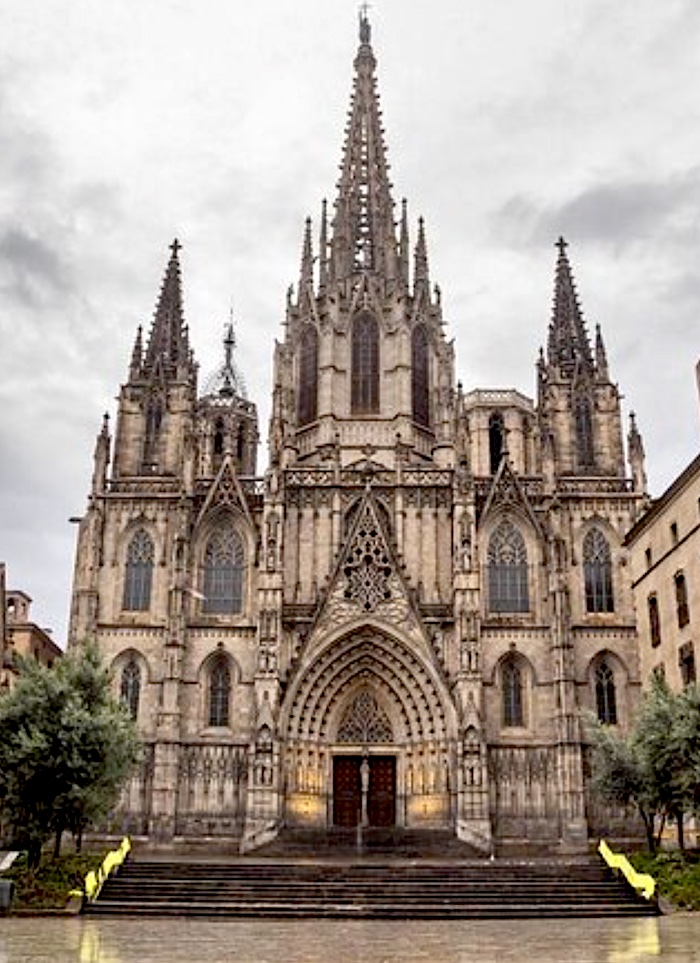
Intrigued, we embarked on a journey through the charming Gothic Quarter, wandering its narrow medieval streets adorned with trendy bars and Catalan restaurants. The district, once a Roman village, juxtaposed ancient architecture with buildings from the turn of the century. Artisans sold leather and jewelry near the 15th-century Barcelona Cathedral, where a delightful courtyard housed playful geese. Meanwhile, working girls roamed the winding streets in search of love and fortune.
“10 Euros,” one of them advertised, while another whistled and winked, provoking a ripple of mixed emotions within me.
Cathedral of Barcelona
Barcelona proved to be a shopper’s paradise, offering everything from large commercial stores on Calle Portal de L’Angel to pint-sized boutiques on Calle Avinyo. Our intended 5-minute stroll turned into a 45-minute sightseeing excursion, filled with cultural attractions and delightful diversions..
Finally, we arrived at Bar Marsella, stepping into a bygone era of old Barcelona that still clung on but was slowly fading away. The walls, stained chocolate brown from years of cigarette smoke, and the century-old whiskey bottles covered in dust created an atmosphere steeped in history. Chunks of paint fell from the ceiling, while thick cobwebs adorned the vault and antique chandelier, adding to the bar’s mysterious ambiance.
Our bartender, Sebastián, greeted us warmly, boasting, “Hemingway was a regular here. We’re famous for our absinthe.”
“Really? Absinthe is banned in the US,” Meagan remarked. “They say it causes hallucinations.”
“Absinthe is a spirit, not a liquor,” corrected Sebastián with a crude smile. “And we serve 100 proof here.”
“Well, we’ve made it this far. There must be a reason why Picasso was such a great abstract artist,” Marcy quipped playfully. “I’ll buy the first round of shots.”
“You don’t drink the absinthe straight. It’s too potent and disgusting,” Sebastián said flashing a crude smile.
“Then how do we drink it? As a cocktail or a mixed drink?” I asked.
Sebastián explained that we could order it in a cocktail, mixed with a mojito, or experience the traditional French way. Intrigued, we opted for the latter.
Sebastián prepared the Marsella, a concoction of one part absinthe and five parts iced water poured over a sugar cube on a fork until it dissolved. He advised us to sip it slowly, warning of a scalding sensation if we gulped it down.
The absinthe’s wormwood and anise flavor proved acrid and potent, but the sugar mitigated the bitterness, while the water diluted the drink, making it more palatable. It was a Mediterranean ritual, marking the beginning of an extraordinary European adventure.
“Swallow this slowly,” Sebastián suggested. “Or else it could scald your throat.”
As the night progressed, Marcy exclaimed, “Ok, the next round, I wanna light it on fire.”
“You can get lit tonight Marcy as long as you live tomorrow to tell the tale,” Meagan quipped.
“And I’ll be sure to wake you up early so we can catch the beautiful Barcelona sunrise,” I added, raising my eyebrows for emphasis.
The next morning, Marcy and I caught a glimpse of the first rays peeking over the Mediterranean Sea at Port Olímpic. Built in 1991, the marina hosted water sports and sailing for the ’92 Summer Olympics.
We ran on the spacious stretch of sand alongside sculptures of sea life to the Barceloneta fishing village. Then we ran past the ferry station and the largest Marine Aquarium in Europe.
“We went there yesterday,” Marcy said, pointing to its unique, cylindrical shape. “It’s a Mediterranean-themed aquarium, and they have a large tunnel which gives you the feeling that you are swimming with the sharks.”
“I would love to pay a visit, but I’m running out of time here. Where else did you guys go?”
“We visited Camp Nou. Meagan and I are both Barcelona FC fanatics.”
“Is that right? I’m a big fan of Lionel Messi, too. He’s the greatest of all time.”
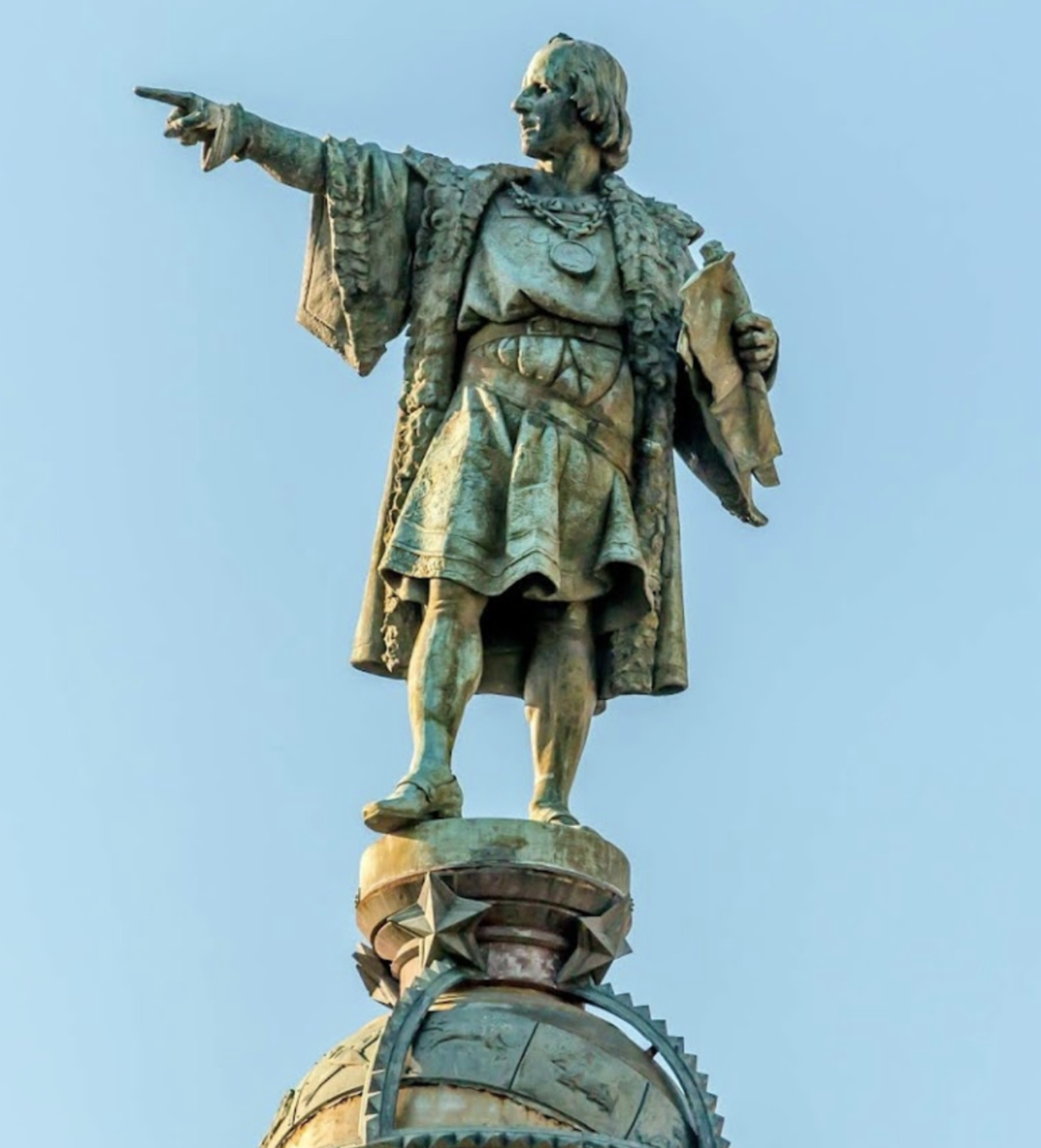
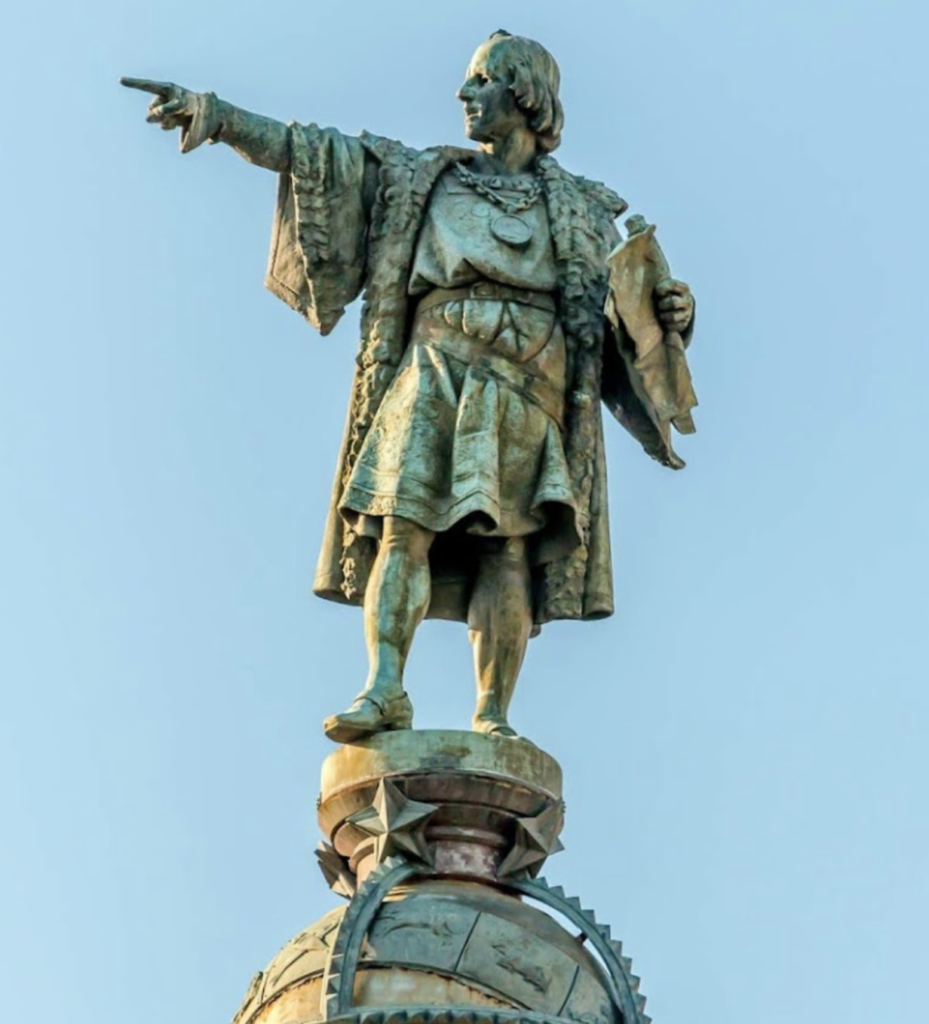
As we ran past the World Trade Center, we saw Christopher Columbus pointing to the distant west over an ornate Corinthian column.
“The hostel staff told me that this is the top tourist spot in town,” Marcy stated
We stopped to admire the statue and then approached to read the plaque.
Monumento a Colón
Monumento a Colón— constructed for the Exposición Universal de Barcelona in 1888. Location of the site where Columbus returned to Spain after his first voyage to the Americas. The monument serves as a reminder that Barcelona is where Christopher Columbus reported to Queen Isabella and Ferdinand after Columbus’ most famous trip.
“Columbus is such a hero in this country.”
“But he’s not adored back home,” Marcy rebutted. “Many consider him a villain who embraced slavery, colonialism, brutality, and theft of indigenous land.”
After discussing the significance of the memorial and watching people starting to accumulate, we ran back along the tree-lined promenade on La Rambla.
“So now that you’re retired from the Navy and getting your MBA, will you be working a government job?”
“I dunno, but I really hope not. I want to do something entrepreneurial, something that will help people and continue traveling not just overseas, but in the US.”
“How old are you?”
“42, and you?”
“24, I thought you were a lot younger.”
“Age is how you perceive it.” I replied with a grin.
Returning to the hostel, we witnessed fellow backpackers emerging for breakfast, enjoying sweet rolls with jam and café con leche. Meagan descended the stairs, stretching her arms and yawning before giving her sister a warm hug.
Meagan came down, stretched her arms, and yawned. Then gave her sis a heartfelt hug.
“Glad you’re alive after last night.”
“We’re very much alive. We ran three miles and saw many Barcelonians jogging,” Marcy uttered. “The city is most spectacular at the crack of dawn.”
“So I’m sorry to see you go tomorrow,” Marcy said with a twinge of sadness. “Where’s your next adventure?”
“Normandy, France, then off to London to see my folks. You guys should join me.”
“Well, it’s not like we have much going on. What do you think Meagan?”
“Thanks for the invitation, but we really have so much more to see and do in Barcelona.”
“Like what?” Marcy asked with a twinge of displeasure.
“Well for one we have to do the obligatory girly thing and lots more shopping on La Rambla. And two, we still have lots of museums to see such as the Picasso Art Museum.
“Those things are important, but recognizing the sacrifices of the greatest generation is priceless,” Marcy replied.
Normandy
As we looked over Omaha Beach, we paid homage to the D-Day troops in Normandy. The troops faced a daunting challenge. The invasion was beset with ineffective air strikes, and poor naval bombardments. This set up the Allied troops against an almost unscathed German front, armed with formidable machine gun fire. The only chance of cover, was to run towards the enemy.
Sixty-five years later, the hilly seaside bore few scars from the dark and gray day of June 6, 1944. But on that longest day, things had turned to hell in a hurry.
I could not imagine these young soldiers jumping out of their LCAs (Landing Craft Assault), crossing the slippery beach and climbing the cliff face via ropes and grappling hooks in the face of nasty fire.
It was extremely unnerving. The soldiers could hear the heavy thump of shells bombarding the exterior of the coffin-like LCAs as they were approaching the shore. They knew death was knocking, but they kept approaching. They kept their mind affixed on the Star Spangled Banner and Her Majesty the Queen.
Some shells hit dead on, the LCAs exploding into tiny pieces like a box of eggs dropped from the Eiffel Tower. Many soldiers perished from gunshot, blast or drowning before even hitting the shore. They would never set foot on the foreign beach they aspired to reach, the sea crimson red, their faces, white with shock and trepidation.
It was a travesty to see so many young, unbounded lives forever lost on the blood-soaked beaches. At the American Cemetery, we could see thousands of white crosses and Stars of David facing patriotically towards their homeland, saluting with only their solemn smiles. This is the final resting place for 9,400 Americans along with a monument to 1,500 more listed as missing in action. How sad that we never found their bodies — brave Americans who never got to come home, their bodies washed away in the English Channel.
“Have you lost close friends in the current conflict?” Marcy asked as she placed her hand softly on my shoulder.
[ Image: American Cemetery .png ]
American Cemetery
“Yes, one to each war – a buddy who I went to school with and a coworker at the Naval Hospital in Bethesda.”
“I’m very sorry. D-Day was necessary to allow the Allies to complete the liberation of Western Europe. The wars in Iraq and Afghanistan are unjust and a tragic verdict of 9/11.”
Marcy and I continued on our run along Av. Moulin flanked by hedgerows and surrounded by geography very similar to what our soldiers faced 67 years ago.
A couple of km later, we were back in Omaha. The beaches still bore witness to the immense human sacrifices. Numerous German battery sites were maintained in excellent condition (since countless, young Germans had surrendered without putting up a fight). As a result, we were offered a rare glimpse into a living, life-less museum that clearly depicts the power and plight of the mighty German defensive. Luckily, many of the troops from Eastern Europe and Asia would surrender at the first opportunity. Many of them were comprised of an international army made up of troops from throughout the Soviet empire and even China and Korea. Can you imagine the looks in the eyes of our GIs when they first faced their enemies?
But still, many Germans fought viciously and effectively. The Germans had four huge casements with a 205 mm cannon. These guns were effective in dueling with American battleships. For eight days, the German soldiers stayed inside the casements with virtually nothing to eat and drink but stale bread and bad water. They had no place to use the bathroom — yet they stayed. Many did not surrender until they ran out of ammunition.
“If you were a young soldier during Normandy, would you risk your life for your country?”
I thought long and hard. “The simple answer was yes, but would I be brave enough to carry out my duties the same way these men did on these beaches? That is an enduring question that bears no easy answers.”
“Why don’t you plan a run back home,” Marcy suggested. “Kind of like the run we did in Barcelona, to see all the amazing sights and to ponder on the significance of these historic landmarks?”
“That’s a wonderful idea. It’s a great way to understand different cultures and to navigate through the sights and sounds of the old continent.”
The English Channel was rough and choppy the next day when I caught the Normandie Express to Portsmouth, England — a high-speed catamaran cruise ferry. I would have time to reflect on the profound question and consider the interesting suggestion from Marcy. She and her sister would catch the Eurail to Paris, and I thanked them for giving me incredible ideas to ponder.
In London, I visited my sister, Kim, my nieces Kae and Rio, and nephew Rintaro at their Chiswick, West London flat. It was a special, last-minute, family reunion – my first time seeing everyone all together.
I gave Kim a tight embrace. “I’m very sorry for the loss of Grandma.”
“Thank you. She will always have a special place in my heart.”
If you crave Arroz con gandules and other Puerto Rican street food, the options are limited in this city. It is the cuisine of Cuba, Spain, and parts of the African continent, and many of the ones that serve authentic dishes leave ambience and decor much to be desired.
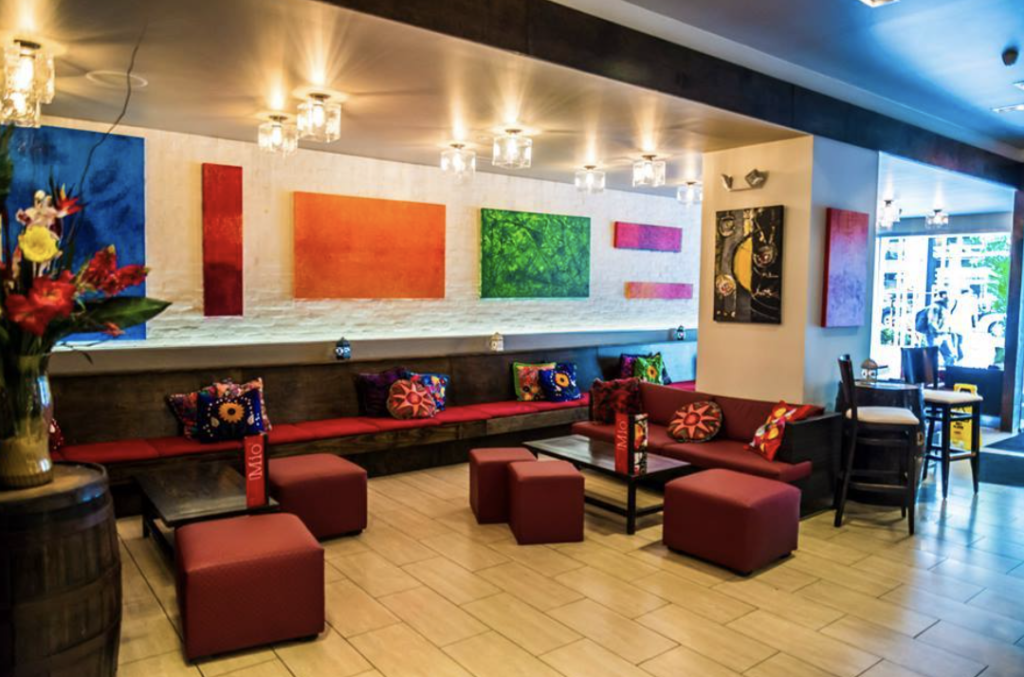
As I walked into the establishment on 1110 Vermont Ave, NW, I was ushered into a modern, chic environment with a lush, zen feel. The decor was elegant and warm emblazoning the vibrant colors of the Caribbean. Latino bureaucrats were hobnobbing it up, imbibing on Piña Colada during a festive happy hour.
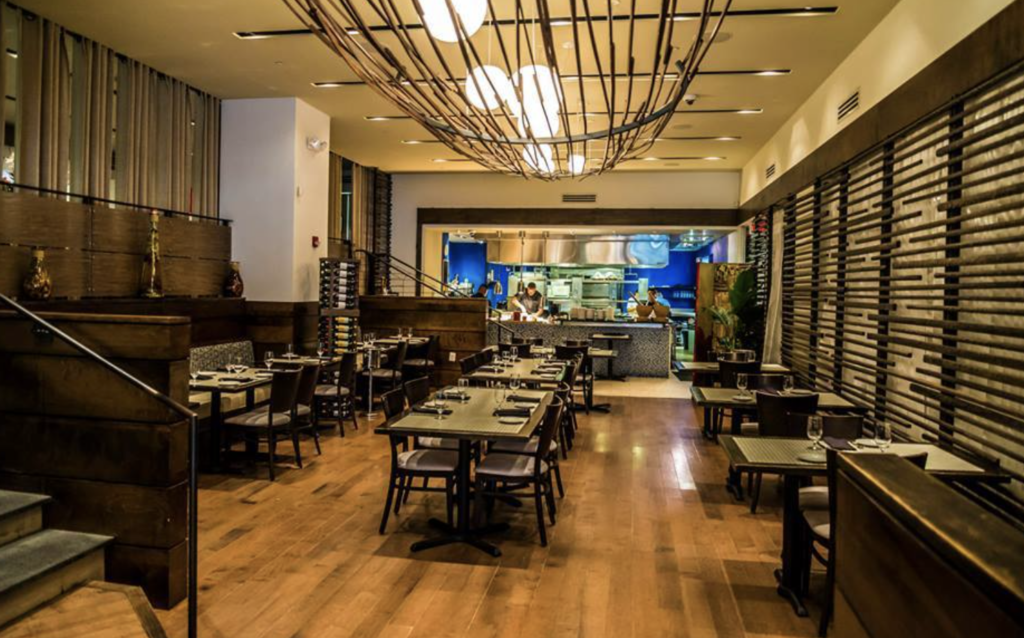
From the dining room, guests were provided with a stunning view of the kitchen. There was a plethora of dark wood on tables, chairs, walls, and even the ceiling. I sat at the bar and was greeted by a chatty bartender named Sofia. She recommended the mofongo con camarones which I washed down with a Spicy Pisco. The mashed plantains were creamy and sweet and the grilled shrimp was quite succulent. Closing my eyes, I gently dropped the last morsel in my mouth and mused over the spicy infusion. At that moment, a gentleman with curly hair and a short, neatly trimmed beard with flecks of gray came over and sat down.
“Hi, I’m Manuel,” he said warmly. “Welcome to the Embassy of Latin America.”
Manuel Iguina first came to D.C. as a medical student at George Washington University. He worked as a waiter at several restaurants in Georgetown, where he learned to love food and switched paths from medicine to cuisine. He helped open several restaurants such as Cafe Atlantico downtown and Ceviche in Silver Spring, MD.
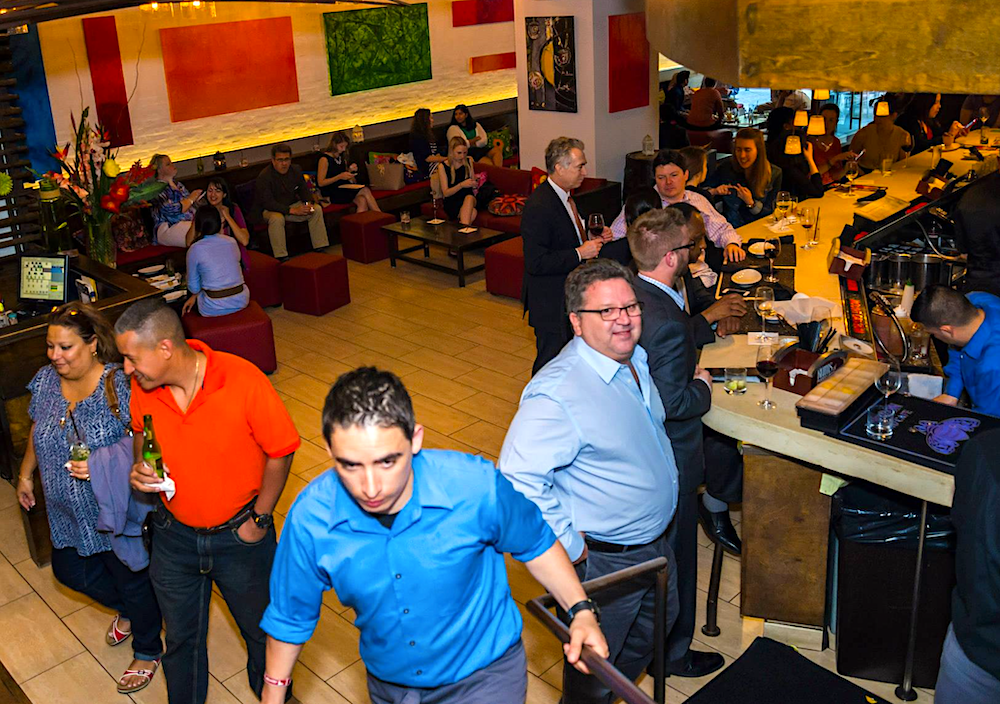
Mio was a place where deals were transacted and connections made. You never knew which celebrity, official, or dignitary would walk through the doors. Justice Sotomayor has been known to enjoy the Tres Leches, and it wasn’t rare to see a Congressional staffer knocking back a Barcardi and coke.
Manuel worked the house deftly, bear-hugging regulars, cheek-pecking amigas, getting to know newcomers while keeping an eye on the busy open kitchen.
“We just hired a new Executive Chef, Roberto Hernandez from Metro Miami, who’s launched a new menu. We need new photos and a sleek website to showcase our dishes.”
“Would be honored to build Mio a snazzy website to complement your trendy decor and authentic cuisine.”
“That’s super. BTW, we’ve retained Heather Freeman to do our PR. I’ll get you in touch with her.”
“I worked with her for the opening of the Italian restaurant, Noellia. She’s passionate about her work and fun to work with. Our M.O. is to host a big event where Chef Hernandez can prepare all his favorite dishes. Then we’ll employ all the photos we take of the cuisine and customers enjoying them and feature them on your new site,” I stated enthusiastically.
I got on the phone and contacted Jason “Foodgeek” of DCFüd. “Let’s host the next Food Bloggers Happy Hour at Mio,” I suggested.
“Super, I love traditional Puerto Rican cooking and Mio’s ethnic cuisine is quite genuine.”
Jason Shriner & Bindesh Shrestha
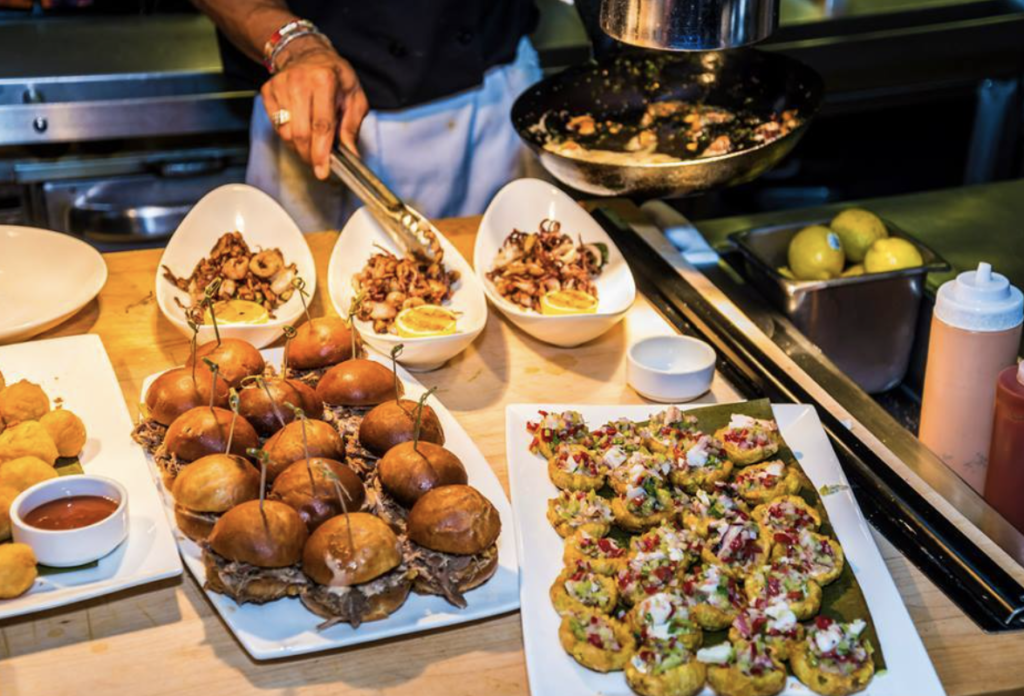
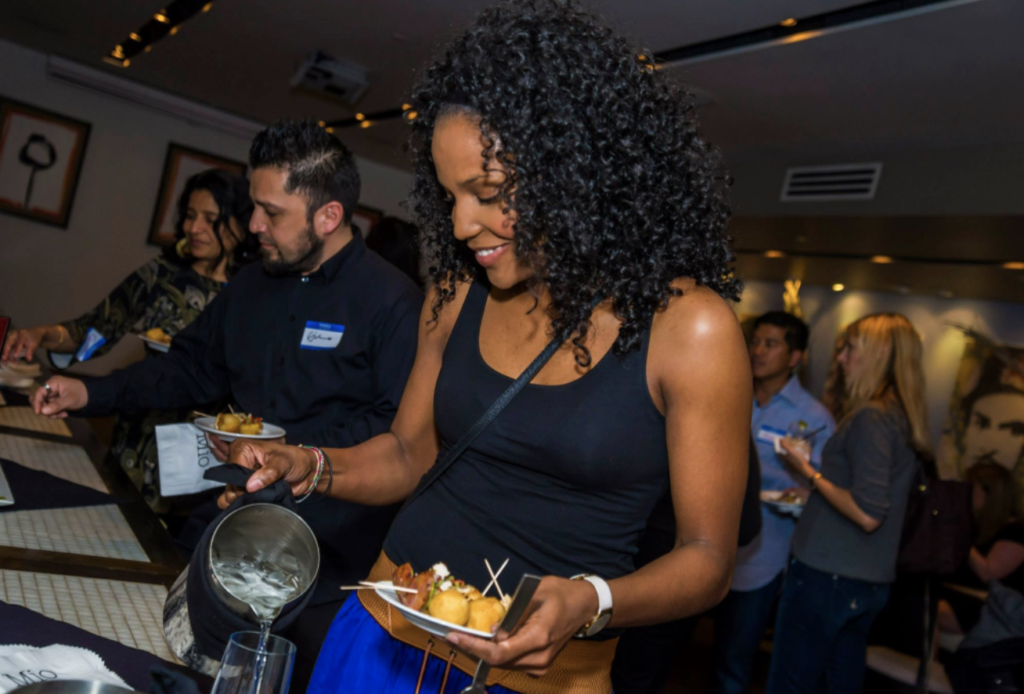
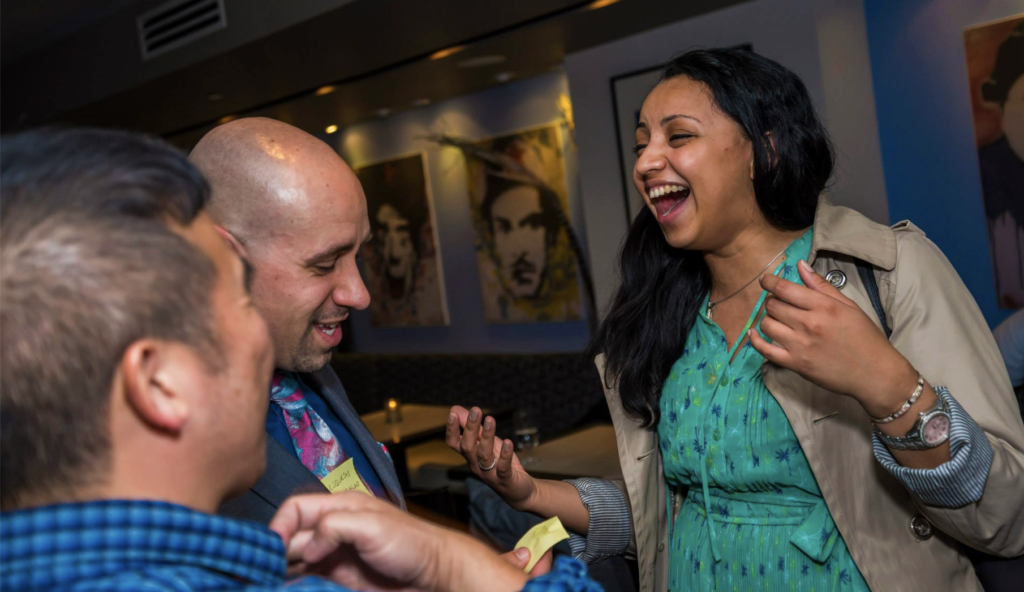
On the day of the event, May 8, 2014, over 30 food bloggers and foodies showed up to sample and devour calamari, ceviche and risotto with roast pig.
“When we first opened, we were serving a lot of pan-Latin cuisine. But our customers preferred Puerto Rican cuisine, and that has been our main focus,” Manuel explained.
Jessica Van Drop DeJesus of the Dining Traveler was in attendance. She was raised in Guayama, Puerto Rico, spending her elementary and middle school years on the island and still has many friends and family on the island.
As a Marine Corps officer, Jessica has traveled all over the world — visited more than fifty countries and lived in six. But she still considers Puerto Rico her favorite place on earth.
D’Angela “Dee” Moore from BonAppéDee
I was happy to see D’Angela “Dee” Moore from BonAppéDee. Dee is a city gal who is utterly in love with food — cooking, tasting and eating all kinds of food, from all over the world. The only thing she loves more than eating food is talking about food.
The other Jason (Shriner) from the Aubergine Chef was there to sample the cuisine. He has great cooking videos on YouTube and teaches a food writing workshop at George Mason University.
“Love the open kitchen concept,” said Jason Shriner. “I learned how to cook several cuisines at my Mom’s side so I just love watching Chef Hernandez create the meals.”
“Grateful to hear. We call it ‘La Cocina Abierta’. We hope to introduce diners to a variety of flavors from the islands.”
From Shriner, my attention turned to the “Foodgeek.”
“So how long have you been writing for DCFüd?” I asked.
“Since 2004, I started out as a writer and now I run and manage the site. We specialize in ethnic food, so I’m ecstatic to be here.”
“Super, we definitely welcome your honest opinion and publicity,” said Manuel.
“Absolutely, but didn’t Tom Sietsema award you 2.5 stars and a glowing review?” I asked.
“Yes, that was eons ago and two chefs back.”
“Does anyone even know what that sneaky WAPO food critic looks like?”
“I would recognize him in a crowded restaurant, but many restauranteurs couldn’t tell Tom Sietsema from Tom senator.”
Plethora of PR food for the Food Bloggers
Suddenly I saw her, getting some food and pouring a glass of water — a lovely caramel-skinned girl, young and fresh with long legs and a sweet face.
“Hi there, are you new? Who do you write for?”
“Yes, I’m Audrey. I’m not a real food blogger but I love to eat out and make new friends.”
“Well you’re saying the right things, and I sense a slight accent — are you French?”
“Well, I was born in the French West Indies and lived in Paris for a few years. You sure have a good ear for tone.”
“Well, a voice like yours stands out from all the rest.”
“Are you flirting with me?”
“Only if you promise to come to more of our events. So what do you do for fun?”
“I love art, Karaoke, dance, travel, hanging out with friends, and obviously sample great food.”
“Well, you’ve come to the right place then. And since you’re a Caribbean girl, can I get you a piña colada maybe?”
“I never turn down an adult beverage. I’m beginning to like your events.”
Audrey Pichmimi @ Mio
The empanadas, bolitas, and cured salmon were cooked to perfection; the tostones were amazing, and the Don Q Rum, mind-blowing.
The event overall was a smashing success and we were able to garner lots of positive publicity. Shortly after, the website launched and Mio was my first Latin cuisine restaurant in my portfolio. This would be followed by The Cuban Corner in Rockville and soon we would be working with a wide variety of ethnic cuisines.
Mio became my favorite place to hang out, not just to eat but to meet expats, Latinos, Latinas, and locals. And Manuel was always good for a toast and a chat.
December 2015
Several months later, Manuel gave me a call. I usually spoke to him several times a week, but lately, the calls became few and far between.
“I’m sad to announce that Mio is closing.”
“Whoa, you gotta be kidding Manuel. You have established a loyal customer base and all the Puerto Rican expats, lobbyists and policymakers call Mio ‘Little San Juan’.”
“Unfortunately, my landlord is doubling our rent and we’ll no longer be able to make ends meet.”
“I’m devastated, Manuel. You are my favorite client.”
“And I hope we’ll continue to stay that way. We have exciting plans for our next restaurant project to introduce the taste of Puerto Rico to the D.C. Metro area.”
“Super, can’t wait. Will you bring back Lechon Fridays?”
“Absolutamente, amigo mio y muchas caipirinhas tambien. We may be closing one door, but an exciting one will be opening soon. Stay tuned.”
Started like any other Sunday in Joplin, Missouri. People went to church and gathered with family and friends. The Joplin High School had just held its graduation, and families were returning home. But as dark clouds gathered above, a severe storm was brewing. At 5:41 PM, an EF-5 tornado touched down in the southern part of the city and tracked east, cutting a 13-mile swath through the heart of downtown.
It struck the campus of the Missouri Southern State University, where the local high school was holding its graduation ceremony. One hundred fifty people were still in the arena and swiftly evacuated to the basement. But others were already returning home and in stark danger. Tragically, the storm claimed the lives of seven students (including one of the recent graduates). 1
After weeks-on-end of studying and exams and tweaking my business plan, I was ready to head west on my cross-country bus trip, looking for that elusive web developer who would be my last cog in the wheel.
The journey which would take me through the heartland of America would seem interminable — four gritty days and sleepless nights. Could I tolerate the middle-of-the-night disruptions, filthy bathrooms, the constant chit-chat from disheveled vagabonds?
On May 25, I boarded a Greyhound from Baltimore heading west. I would stop in San Diego to run a marathon with Janine and her hubby before I headed north to Vancouver to find a web developer for my site.
But at the last minute, I decided there was a more significant calling than just running a road race. The city of Joplin had taken a heavy toll, and they desperately needed help.
A full-figured woman in her early 20’s sat a few rows behind me in a rowdy bus where a couple of boisterous fellows were cracking us up like a lobster claw. The jokes were coming at a feverish pace, exactly what we needed to establish the right mood for the long journey. One rugged hooligan was getting too fresh for comfort, causing the girl to pitch a fit.
“Young lady, please get up and sit somewhere else then. The rest of you brats – if I hear another peep from you, I’m gonna pull over and drop ya’ll off on the side of the highway where you’re gonna have to thumb your way home,” the bus driver announced indignantly.
The commotion subsided, but, I still didn’t get a lick of sleep for the next few hours. At the transfer in St Louis, I joined the other backpackers lounging on the floor. I would be stopping in Joplin for tornado relief – my body and my mind yearned for respite.
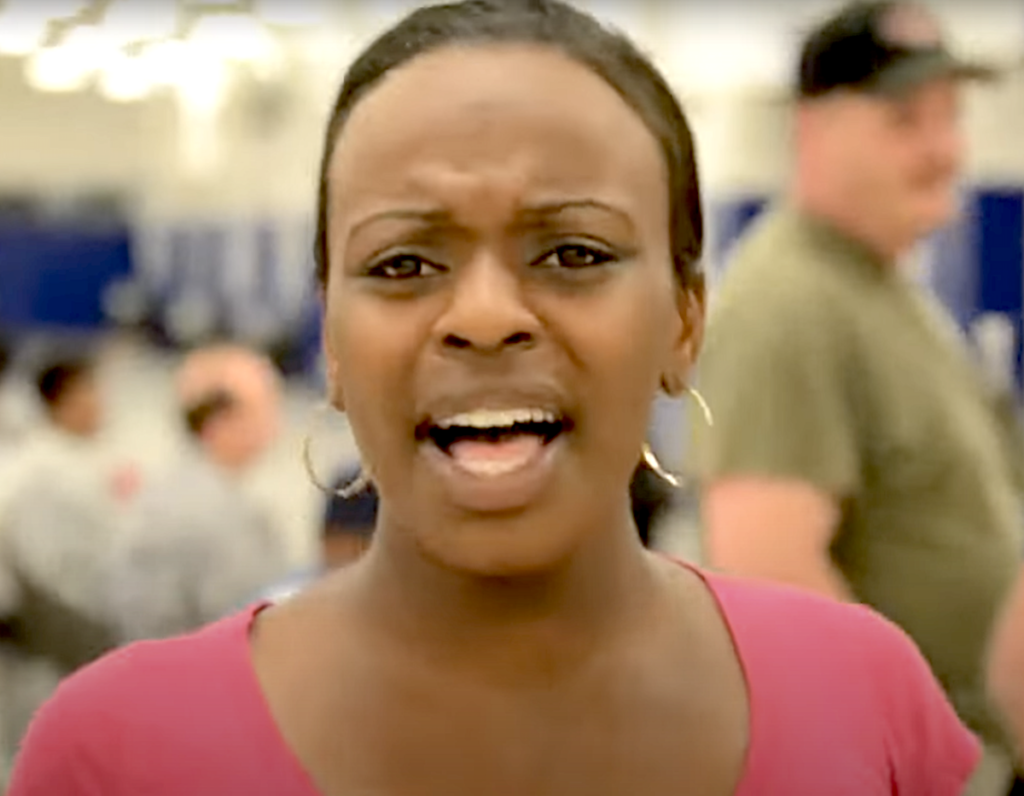
Damaris singing @ the St Louis Greyhound station
Suddenly my siesta was interrupted by a soft rendition of Keyshia Cole’s “Love”. She had a voice that could move mountains and a face that could launch a thousand trucks.
“Wow, you sound just like Whitney Houston.”
“Thank you. Maybe my delightful croon will make me rich and famous one day.”
“I certainly hope so. What’s your name and where you’re going?”
“You can call me Dee for Damaris. I’m heading to Ok. City to visit my aunt, Mimi.”
“Right on my dear. You should be going to L.A. You have a face of a movie star. I hope you’ll remember me when you record your first album.”
“How ’bout you — how far west are you going?”
“All the way to California, but first, I’m making a stop in Joplin.”
“Yeah, I heard about the tragedy – many precious lives were lost, thousands of homes destroyed.”
Then as I boarded the bus in St Louis, the bus driver started to give me a hard time.
“Are you sure you want to get off in Joplin — the entire town has been wiped off the map.”
“Absolutely, tens of thousands of survivors desperately need our help.”
“Ok, but your bags are going to San Diego.”
“Can’t do that, Ma’am. I have a foldable bike in the baggage compartment, and I’ll need that to navigate my way around the disaster area.”
“You’re outa your mind. That’s against Greyhound policy. Since the town is completely devastated, I’m sure they could use your help — what little support you can provide.”
Thankfully, the driver relented, and as we entered the town, I felt road-weary but headstrong for whatever lay ahead. I hugged Damaris goodbye, hoping she would suddenly decide to come along.
“Stay safe,” As she wiped a tear from her eye. “I hope we’ll meet again soon.”
“Well, eventually, I’ll be heading to California to find someone who can help me create a restaurant search directory. Maybe something that you can find useful one day.”
Damaris rolled her eyes, doubtful that would be in the cards.
When I stepped off the bus, my sour, sweaty smell of three days of rolled-on antiperspirant evaporated like steam in the scorching Missouri sky. There was no one to greet me, not even a soul on the street. It was a lonely bus stop in a mid-sized municipality, some parts showing virtually no signs that a deadly EF-5 Twister had rolled through a few days ago.
Despite lugging an extra bag around from bus to bus I was now deeply grateful that I had decided to bring my Dahon foldable 12-speed roadster along.
President Obama and his entourage and Governor Nixon had just visited and showed compassion. “This is a national tragedy,” Obama said. “We’re not gonna stop until Joplin is back on their feet.”
Flags were flying at half-mast. Emergency response vehicles and T.V. trucks filled up a parking lot at the downtown mall. A National Guard hummer drove through the desolate downtown like it was in Iraq after the Battle of Ramadi.
The campus of the Missouri Southern State University, where the AmeriCorps had set up their task force, was four miles from downtown, and taxis weren’t readily available during a crisis. I loaded all my luggage on the bike (Macbook Pro, Nikon 5100, sleeping bag, and thankfully only a few pieces of clothing) and pedaled my way to the Volunteer Relief Center.
By the time I arrived on campus, the volunteers had already departed for the day, scraping the thick crust of grime covering their arms and legs. The staff was putting things away, and in the cafeteria, a large throng of AmeriCorps members was busy debriefing the day’s events.
I was fortunate to catch the tail end when the staff decided to recognize each other for their hard work and dedication. I pulled out my camera and started filming, unbeknownst that I would witness something quite remarkable. This is where I met Quinn, Julie, Abby, and Will — incredible people who sacrificed tremendously to serve Americans in need. They called on each other and recognized their contributions. Then they presented a rose as a token of appreciation. I choked as I held back tears for people I didn’t even know. But after sharing with us something special from the inside, I felt that they would be dear friends for life.
Just a month before the tornado, a Memorandum of Understanding was signed that established Missouri Southern as an approved American Red Cross Shelter. The timing was perfect, and the campus turned out to be an excellent resource and accommodation. I didn’t have a rack to sleep on, and hot foot was limited. But the building was new, and the couch that I slept on was firm and comfortable. I was blessed to have a roof over my head, considering the thousands of people who were left homeless. I made sure I got some rest because tomorrow would be a big day.
Julie was one of the first team members that I met. Incidentally, she was from College Park, Maryland. I could tell that she had a lot on her plate, so I asked how I could be of help.
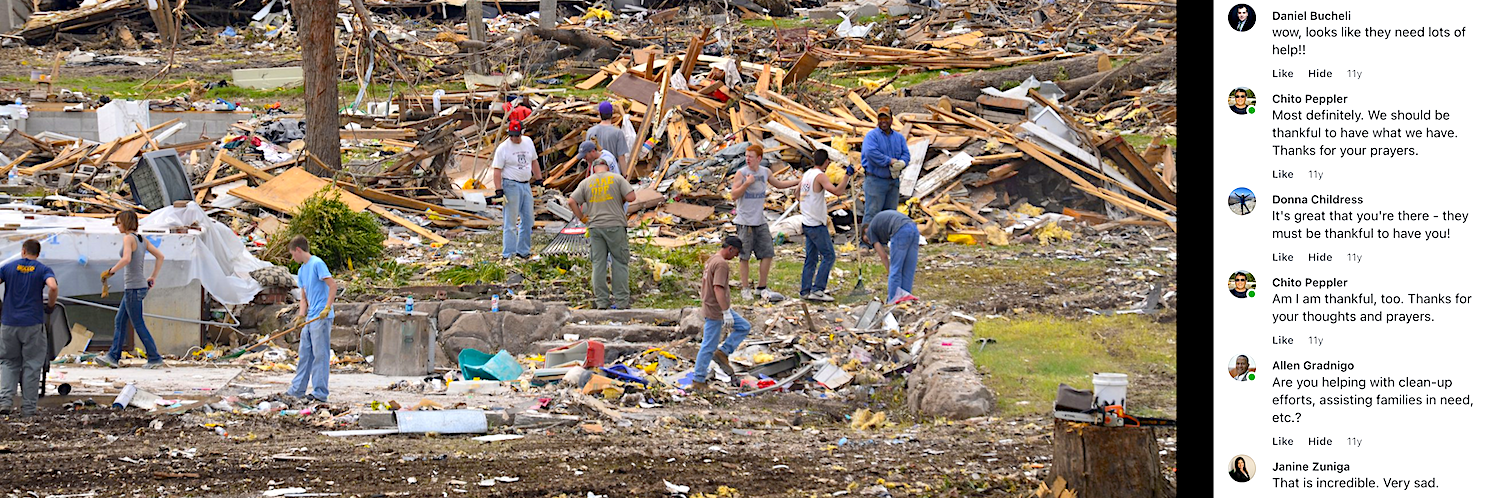
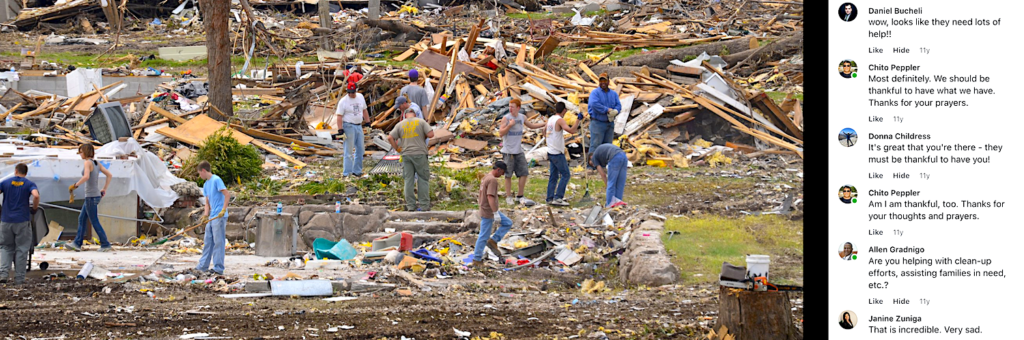
The overflow of support from Americans everywhere had been enormous. Thousands of people called United Way and American Red Cross, offering their homes, vehicles, services, etc. AmeriCorps then posted this info on their Facebook page.
“We’re getting dozens of calls a day from people offering to donate goods and services to survivors. People are offering their cars, computers, cell phones, tents, food, clothing,” said Julie. “We’re simply posting these offers on our Joplin Tornado Relief Services Facebook page, and it’s first come, first served.”
The issue with these postings was that there were not sortable or searchable nor user-friendly. There was not one clearinghouse that gathered all the information. As a result, many of these donations were not managed effectively or were simply wasted. So I took the initiative to create an online database where the AmeriCorps could easily track all donations and match them specifically with survivors depending on their exact needs.
So I spent the first two days on campus creating an online database with Drupal (which I literally learned on the go). After a lot of painstaking research and trial and error, the database was created — a small but momentous cause for celebration.
* * *
My next goal was to document the heroic contributions of the AmeriCorps’ disaster relief teams. Spending the last three days working alongside them, I had nothing but wonderful things to say about this dedicated group of young men and women. They were bright, innovative, and selfless, never counting the costs of uprooting their lives to serve our country in need with very little pay. With people like Abby, Julie, Will, and Melissa, I was left impressed and thankful for their sacrifices.
But there was only one problem: I didn’t have any closed-toe shoots. Traveling on Greyhound, I had to travel light. Thank goodness, Abby came to the rescue and lent me her boots for the day.
The next day I visited the site ravaged by the tornado and met some of the victims. The first time I got to see the damage, I was shellshocked. Trees that were left standing were stripped bare by the intense winds. The images brought back forlorn memories from Haiti after the 2010 earthquake. It had already been an amazing whirlwind tour in what has already been a very long journey for disaster relief for one of the deadliest single tornadoes in America.
I met Christina on the bus going out to the field. Originally from Georgia, her mother owned a house an hour from here. An outdoor person with a warm heart, she loved to snow ski, windsurf, sail and pitch a tent and enjoy nature at its finest. Christina would be spending the next month sleeping in tents and volunteering for both the AmeriCorps and the Ozark Food Harvest. After this stint, she would be heading north to Alaska to go glacier camping.
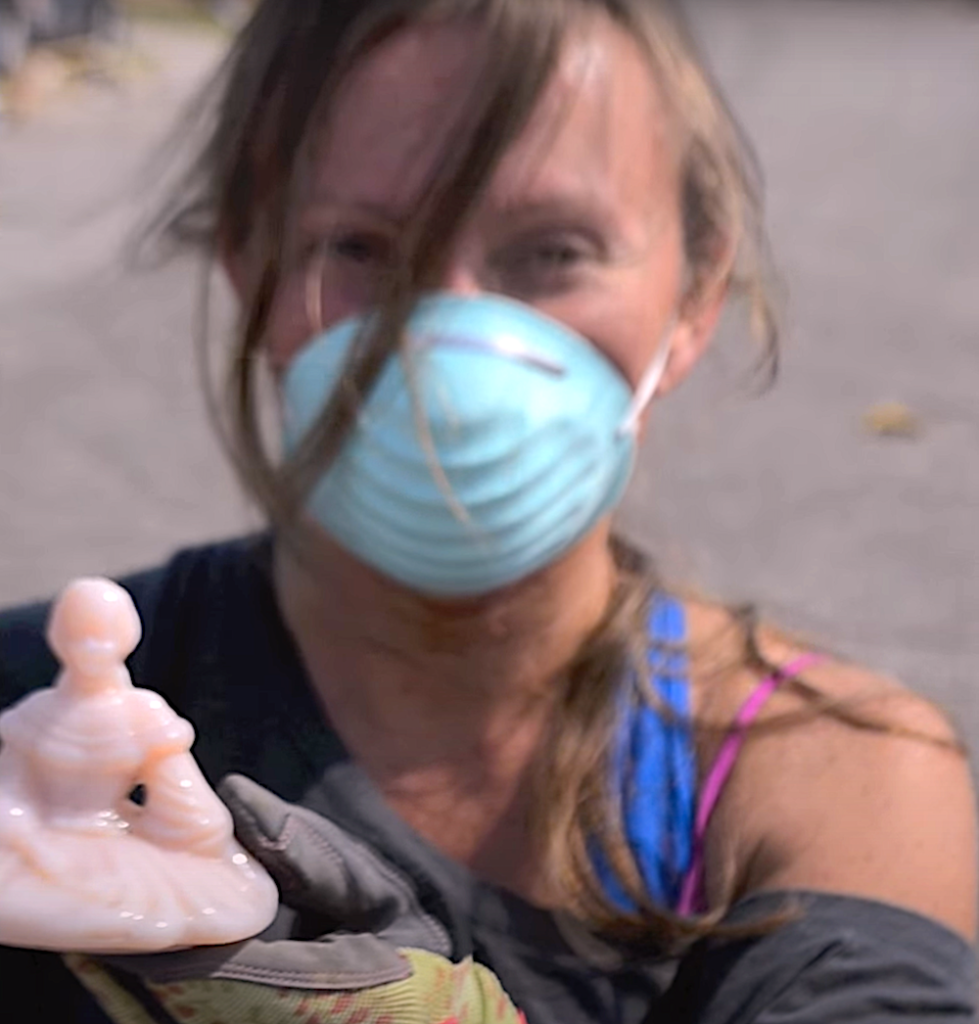
I listened to Christina as she cleared debris and collected memorabilia. One of the hardest parts of the relief effort was recovering personal belongings. Many of the pictures, some over a generation old, would be digitized and posted online in hopes that someone would claim them. Christina found some dental records, books, videos, and a porcelain figurine.
Debris piled near the street would be picked up by the U.S. Army Corps of Engineers.
I also spoke to Chelsea, another volunteer who lived in the area.
“Many people think we’re a small town. The population in Joplin is 50,000, but actually, 300,000 people work and shop here,” she said. “Lots of folks commute from neighboring town — just like me.”
I was humbled and honored to meet Jerry and Debby, one of the homeowners who lost two houses: theirs and their daughters. Jerry was actually in his truck when the deadly twister hit. He was lifted up and spun around before being dropped in front of his house. His house was pulled straight out of the foundation and blown to bits. House after house for miles in all directions was literally reduced to slab. Cars and trucks were crushed like soda cans. Jerry was fortunate to have made it out alright. His house was reduced to shreds, but he was blessed to have his life and that of his lovely family.
“It’s slowly sinking in,” said Debby, as she looked through some old photos. “It’s taken a week for me.”
“Yes, we really need to come here and experience it. Watching it on T.V. is not enough,” said Chelsea.
Christina looked through some pictures she found. “And it’s important to look at your belongings as just items that come and go. They are not attached to you personally — it’s time to move on.”
I was deeply touched when I visited St. John’s Regional Medical Center. Every window in the hospital was blown out, and the top two floors were ripped away. The staff had only minutes to pull patients from their rooms and into hallways before the storm struck. The entire building had been moved four inches off its foundation and six people died. Because there were concerns that the structure might collapse, the building was evacuated.
Soon, the relief effort would come to an end and the city would shift into a reconstruction phase that would last for many years.
I was proud and happy to see Sailors from the USS Missouri (SSN-780) clearing rubble and assisting homeowners with retrieving their belongings. Like the humanitarian assistance deployments to Haiti after the deadly earthquake last year, the U.S. military is always there to assist whenever disaster strikes.
Soon, the relief effort would come to an end, and the city would shift into a reconstruction phase that would last for many years.
With damage estimated to be $3.18 billion, the Joplin tornado is the costliest single tornado in U.S. history (adjusted for inflation). 553 businesses and 7,411 homes were damaged or destroyed, affecting more than 17,000 people. The storm reached a maximum width of nearly one mile during its path through Joplin, killing 161 people (with an additional eight indirect deaths).
In 2013, Dishcrawl stormed into town giving RUNINOut a run for the money. During their events, food lovers gather together and visit several restaurants themed around a type of food or neighborhood. It’s a fun way to discover different restaurants, meet new people and enjoy some amazing food.
On October 5, 2013, Dishcrawl held the world’s largest one-day chef competition called Battledish where foodies and the general public sampled food from six different restaurants and chose their favorite dish. Events were held on Saturday in major cities from coast to coast such as Seattle, New Orleans, D.C., and San Francisco.
Qui-Juan Jones, the local coordinator asked me if I wanted to be a judge — he didn’t have to wait long for an answer. I was honored to be amongst a cast of scraggly bloggers and was looking forward to strolling up and down U Street sucking on grilled diver scallops from The Tap & Parlour, nibbling on buttermilk fried chicken from DC 9, and chewing on charred octopus from Ulah Bistro.
[ Image: Battle Dish Judges.png ]
Battle Dish Judges
DC-9 is a nightclub that hosted D.C.’s top go-go musicians from Chuck Brown to the Young Senators. Wayne Manigo is a huge fan of D.C.’s homegrown funk. In the early 70s, Chuck Brown laid the groundwork for new music inspired by funk, blues, soul, and salsa, and D.C. was where this groundbreaking genre was born.
“Yeah, the go-go music has made a huge impact in my life and my career in comedy. There were many nights I would stay out late at DC-9, but the beat was so infectious, it carried me through all during the week.”
Wayne was also interested in hearing about the Battledish competition.
“I have a lot of respect for the chefs that pour their blood, sweat, and tears on U Street — it’s hard to run a restaurant on these tough streets.”
I took a sip of my Absolute ruby red peach liqueur which was sweet but not strong enough. “Yes, running a business is a huge challenge here — it’s where many restaurants barely survive and die.”
Wayne took a bite of my hush puppies and nodded in approval.
“Down the road, in D.C. Central Kitchens, Chefs Jerald Thomas and Marianne trained me. I owe a debt of gratitude to these master chefs. Because of them, I’m no longer a starving artist.”
After Ulah was announced the winner, and everyone was stuffed and had a fabulous time, I thanked Qui-Juan for the priceless opportunity to serve as a judge.
“We should host an event together next time. Same format, the same number of restaurants, just sans the judging.”
“That’ll be great. Just networking eating and drinking. Where are you thinking?”
“We haven’t done many events in Virginia. Can we find a walkable place with lively nightlife, lots of young people, and diverse restaurants?
Tucked away just north of Arlington and west of Rosslyn, Clarendon used to be a sleepy town, straddling the line between city and suburb. In 2009, the Washington Post described Clarendon as “the hippest spot north of Richmond and south of the Potomac1
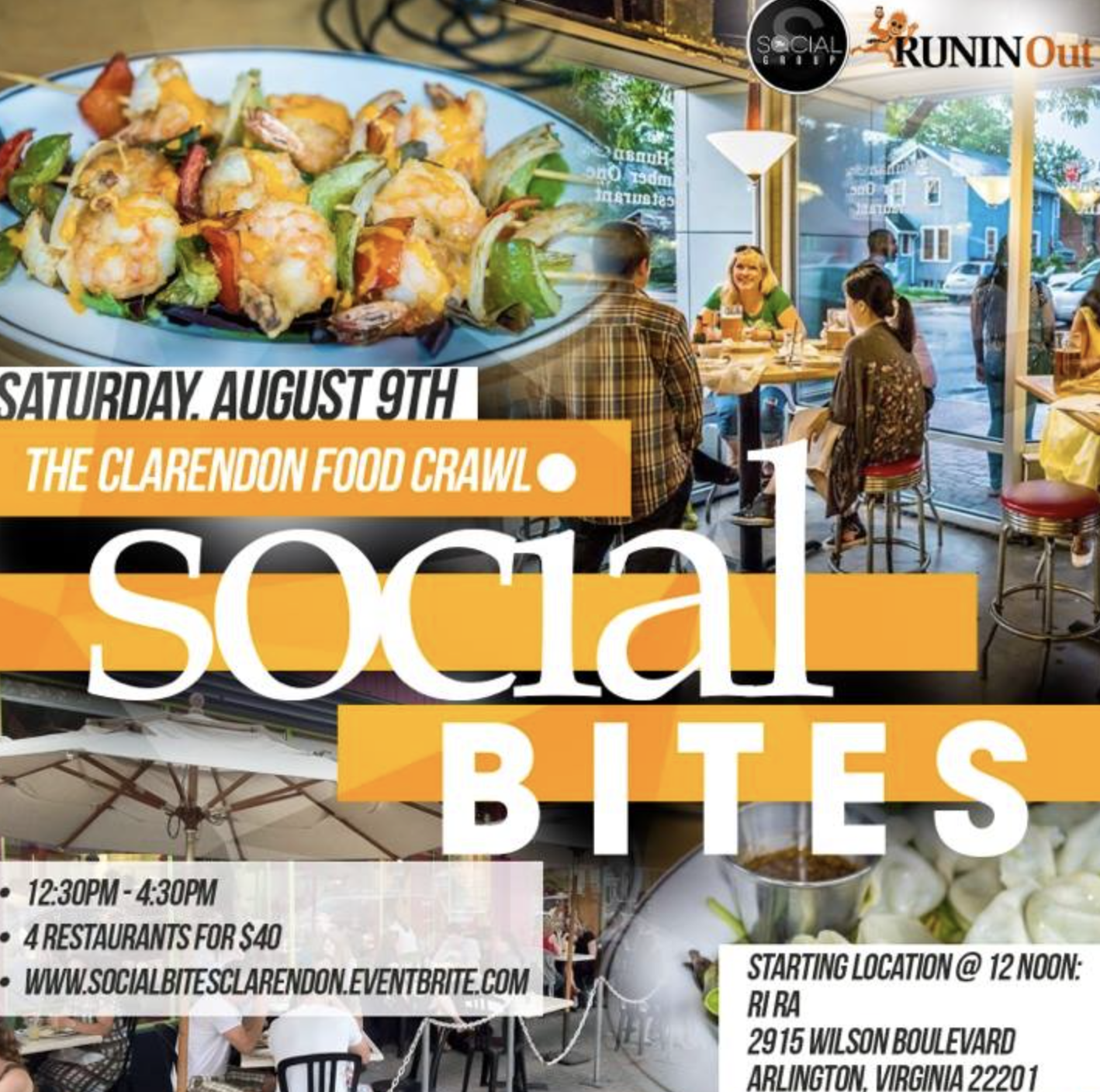
It was Saturday, August 9, 2014
Here are excerpts from the blog written by Annamaria for RUNINDC
[ Image: Annamaria @ Spice.png ]
Annamaria @ Spice
What a treat! You simply can’t beat five lovely restaurants in the heart of Arlington for only $40 per person. A play on those fun Pub Crawls that seem to be happening everywhere these days, the Clarendon Food Crawl, took lucky participants on a culinary tour of Ireland, Italy, Mexico & El Salvador, the Mediterranean, and Asia. Hosted by RUNINOut and Social Group D.C., it was well worth the time and money spent.
The group started at Ri Ra Irish Pub. The decor was amazing as it was built from authentic Irish Salvage materials some dating back over 100 years.
We started with the potato and leek soup with potato croutons and served with brown soda bread. This paired nicely with an Irish Mac & cheese with toasted bread crumbs with Irish cheddar.
We were served excellent fish and chips, prepared by Mike Grasso, accompanied by tartar sauce, a slice of lemon, and malted vinegar as is traditional in Ireland. The cod was cooked perfectly, flaky and wonderfully moist, inside with a nice thick beer batter and hand-cut chips. To top it off, we enjoyed a Guinness sundae Guinness draft on vanilla ice cream with Jameson whipped creme
Next, we traveled next door to Clarendon’s little slice of Italy at Faccia Luna. We were greeted with a huge buffet-style meal of pizza (pepperoni, cheese, and veggies) and salad.
This is Judy Castiglia’s first event with RUNINOut and was referred by her friend Jason “Foodgeek” of DCFüd.
“The crust was thin, but not too thin and it has great flavor. The sauce was tangy and garlicky, and the pepperoni was the perfect addition,” said Judy.
I was pleased to find they didn’t cook their pizzas to the point of being crackers as some places do. The Italian salad was an excellent complement to the pizza, and the accompanying choices of Balsamic Vinaigrette and Ranch went well with the iceberg, radicchio, mushrooms, and shredded mozzarella. Like Ri Ra, Faccia Luna’s decor was classy and gorgeous and definitely worth visiting. The restaurant has been a mainstay of Clarendon since 1992.
[ Image: Judy Castagna (far right) sitting across from Anna Maria.png ]
Judy Castiglia (far right) sitting across from Anna Maria
The third stop on our trip through the various nationalities of food along Washington St. was Mexicali Blues which boasted the largest patio seating on the block and its own charms such as the Coronita, an original mixture of a margarita served with a Corona held upside down inside the ‘rita.
[ Image: Qui-Juan Jones.png ]
Qui-Juan Jones (right) & friends
Basically, as you drank the margarita the corona replaced the missing liquid. On the inside, the restaurant boasted plenty of seating as well. This was most assuredly a great place for large get-togethers and events. The decor was a good mix of traditional Hispanic colors, paintings, and artifacts such as a bull’s head mounted in the corner, pottery, and the day of the dead painted skulls. Each person got a plate of the Yucca con Chicharron. The yucca which is a plant native to Central and South America was lightly fried but not well seasoned in my opinion.
The yucca root had a taste and texture similar to potato yet marginally sweeter. It was cooked to nice doneness where the skin was refreshingly crisp and the inside still soft. Naturally, it is very mild and I felt a touch of salt would not have hurt this side dish. My fellow table-mate at this event said traditionally he thought it was caramelized a bit more but not salted. That would have worked also in improving the tame taste of yucca. What did save the side dish was the outstanding horseradish sauce. I cannot say just how much I love horseradish, I swear I could eat it raw. For those not quite so fond of this root don’t despair, Mexicali Blues’ offering is light enough to please any palate. The cabbage salad that came with our small plate was lovely, crunchy, and spicy but not overly hot. Lastly, the Chicharron was less than optimal. The flavor was spot on, savory with plenty of spices blended in the sauce it is simmered in. The pork however was simply over-cooked which is a shame because there is almost nothing as good as a succulent bite of pork. I can’t write this place off entirely based just on the food sample and am planning on a return trip at some point if for no other reason than to get a Coronita.
At Spice, the fourth restaurant on our list, we were served family-style – one huge platter per table. Located right across the street from Mexicali Blues, this minimalist deli-style corner spot had limited indoor seating but their shaded patio was airy and spacious. For our meal, there was a choice of roasted chicken or salmon served on extra-long grain rice, with sides of potato or carrots, and salad. The roasted chicken had a good full flavor with just enough lemon and olive oil. The salmon dish was cooked with its combination of herbs and olive oil was absolutely deliciously infused into the delicate flesh of the salmon.
Yasser Mohammed opened Spice to showcase his wife, Rahma’s amazing cooking. “We want to keep the quality high. Each day we cook small portions in order to keep every dish fresh.”
The lamb was marinated for 24 hours. The Amoroso Hoagie rolls delivered from Philadelphia were made with 680-day-old prosciutto, imported from Parma, Italy. The chicken was grilled with seven different spices.
With Yasser’s eye for these fine details and Rahma’s natural flair for cooking, Spice offered an authentic Mediterranean menu in a beautiful, colorful setting.
The final big blow-out was at Hunan One next door. The inside was enormous with ample bar seating, plenty of booths, tables, and bar-stool islands near the windows that accommodated groups of all sizes. Starting with the bar they had a good list of beers and wines presented at nice discounts for our group. We got half off wine bottles, pints at $5.50, and $4.75 rail drinks. I split a bottle of a lovely White Zinfandel with Judy which went well with our samples. As was my tradition, I tried the hot sauce first. It was a spicy chili sauce that delivered a medium-hot level of heat but didn’t kick me in the mouth.
The spring rolls were light, fresh, and delicious and the chicken and beef satays were marinated with spices and served with peanut sauce.
My only real letdown was the crab rangoon which was a little toothsome and seemed as though it had come from a frozen bag instead of being freshly made. Also, it was overly sweet causing me to wonder how exactly they got it that sweet. Finally, the chicken wings were exceptionally seasoned with five-spice and were delectable! A thin layer of crust on the outside and perfectly done and juicy on the inside, they make my list of dishes to return and have more of in the future.
[ Image: Rob Webster .png ]
Rob Webster
On the whole, the Clarendon Food Crawl was a big success. The tour explored both familiar and new, agreeable experiences. Friends were made, good food and libations imbibed and we finally had our first food crawl in our belt.
By Annamaria
“Great job on the blog post Annamaria!”
“As long as there’s free food, I don’t mind writing for free.”
“I like you a lot better than Bindesh and Rob. They come to my events and all they do is eat, flirt with the girls, tell some jokes and maybe post pics on social media. You’re giving back to the restaurants by writing a decent blog and which many readers consider a credible source of information.”
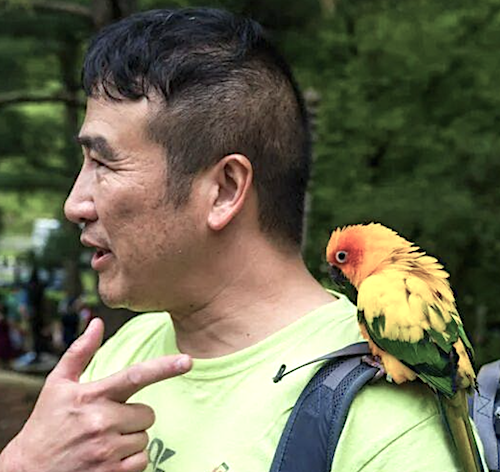
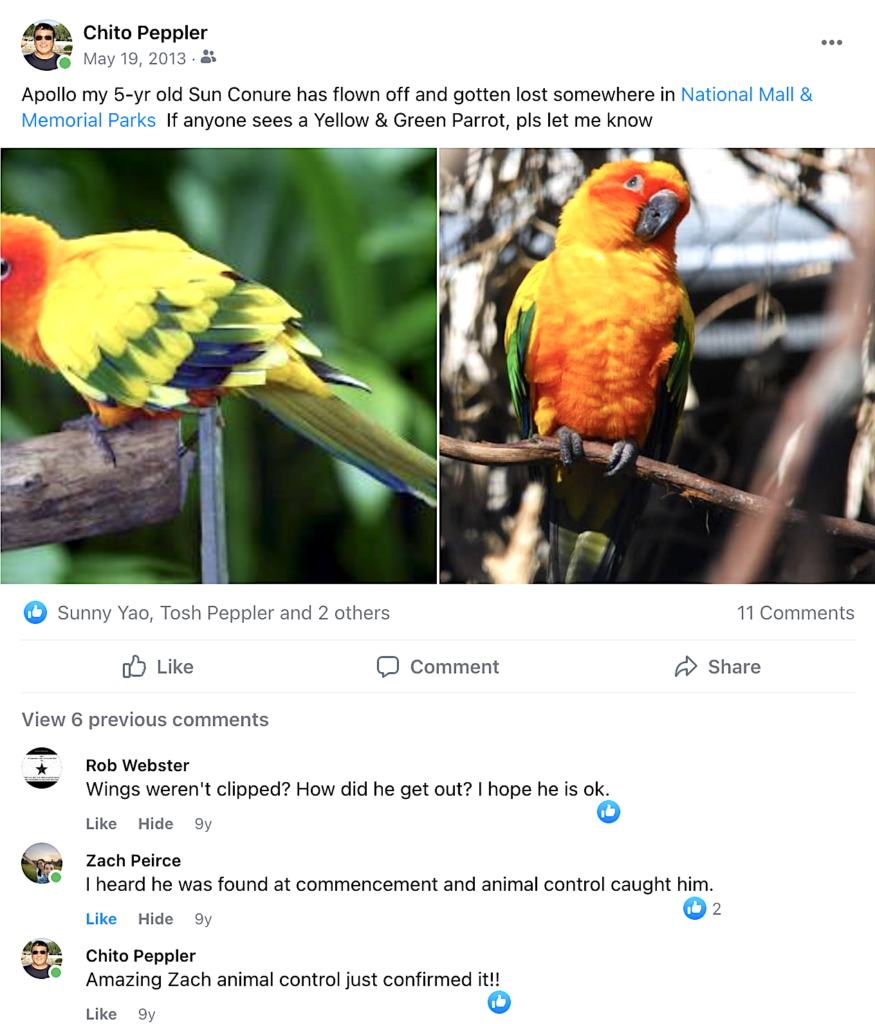
The next month, I took Apollo on a run at the National Mall. Apollo took flight as he often does, but this time, he went higher and further than ever before. Oh my goodness, I conveyed an expression of blunder. I had gotten so careless that I had forgotten to trim his wings, and suddenly high above the Mulberry trees along the scenic mall, Apollo found freedom.
I looked everywhere for Apollo, even bringing along his cage, his Bonka Bird toy, rattling in the wind. I scattered sunflower seeds and peanuts everywhere and had to fight off the squirrels who had a field day. Sadly, he was nowhere to be found. Like a menacing tween, he had skipped school, and he was not yet ready to return to his distressed patriarch. The massive magnolias along the miles-long cinder path served as an ideal refuge for him, while the Capitol dome and the Washington Monument obelisk served as landmarks.
“Apollo, please come home to Papa!” I screamed at the top of my lungs. As sunset beckoned, I came to the sad conclusion that my wails were been drowned by the hustle and bustle of young people and tourists mingling on the grassy fields.
Soon the sun was shadowed by the majestic, iron dome of the Capitol, and I would return the next day to make my unwavering attempt. At daybreak, when the sun’s rays bathed the Lincoln Memorial in golden sunlight, I was roving up and down the grassy turf searching for my wanderlust feathered friend. I played a scratchy recording of his chirping. It sounded promising, but after a while, the raspy screams only commingled with the purrs from the cormorants and the buzz from the sparrows. GW University just so happened to be hosting its commencement ceremony at noon, so soon there would be several hundred black caps and gowns and excited families scurrying all along the mall.
Since I couldn’t physically search, I would leverage social media. My Facebook posting gained some traction and I started to get excited when Zach Peirce mentioned that one of the graduating students saw Apollo hanging out on top of a standing fan, just screaming away. So she called the Washington Humane Society who readily captured him.
I immediately called them and was overjoyed when they informed me that my poor Apollo was in safekeeping.
Apollo was home now, and he would join me on more runs and escapades throughout D.C. But this time, I would ensure his flight feathers were properly trimmed and his favorite Bonga Bird toy within arm’s reach.
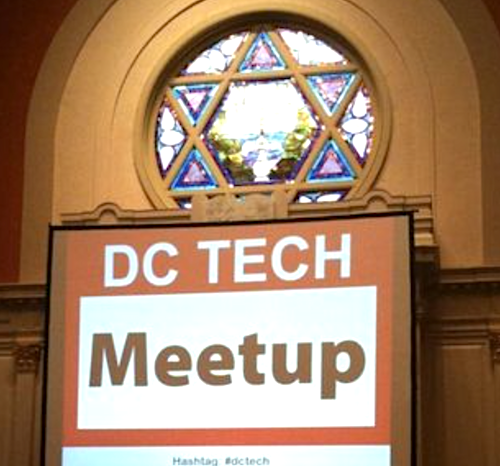
Every month, D.C. technologists, investors, and entrepreneurs gathered together for discussions, lightning talks, and demos. #DCtech. With over 25,000 members, the event was usually held at a large auditorium such as the historic Synagogue on 6th and I St. or the Martin Luther King Jr. Library.
On Tuesday, May 1st D.C. Tech was hosting a “Hacks, Code and Creative” meetup at the Synagogue. I decided to arrive early to pass out stickers and shades to attendees who were arriving.
Peter Corbett, the CEO of iStrategyLabs came storming in. “You can’t do that. I never gave you permission.”
“Why not, it’s just swag.”
“People will get the impression that you’re part of this event. And we have huge sponsors who are forking out tons of money to make this happen.”
“Well, maybe one day I’ll be there. But as for now, we’re just a fledgling startup.”
Peter Corbett is a tireless tech evangelist and the defacto leader for D.C. Startups. Out of a Logan Circle row house in 2007 that quickly won over Fortune 500 clients with his quirky digital marketing campaigns.
He was selected to be a speaker at the World Economic Forum in Davos, Switzerland, where he shared lessons learned from D.C. and had the mayor’s ear on any issues relating to tech.
But in a city filled with unvaried lawyers and govvies, he became the jaunty party host, who seemed just as interested in helping find dates as in matching entrepreneurs with each other or with investors.
Peter strode with an air of confidence and controlled the meetup with a strong grip. Everything had to go through him, all decisions, even the minutiae, and woe on to you if you got on his bad side.
While the sanctuary pews are where one learned about breakthrough innovative ideas, it was actually on the booths and bar stools where one got to engage with novel minds.
Inside Penn Social, with an iPad on hand, I was delighted to find Peter in a free moment so I quickly approached him before some other entrepreneur or intern did.
“Peter, I’m so sorry about passing out swag — I didn’t think about your sponsors.”
“No worries. Just don’t do it again.”
“Absolutely not, say I love your innovative beer cooler in your office — it’s a very avant-garde.”
“Yes, in order to grab a Yuengling or Bud Lite, they have to check in on FourSquare.”
I quickly typed into my iPad and showed him the results. “Here are all the pubs in the area that serves traditional Yuengling on draft, Coors, D.C. Brau Corruption, or any brand or type of beer that you’re looking for.”
“Interesting, and I can find a bar that shows football and is playing my favorite teams?”
“Absolutely, it shows you a faceted search result and you can update your profile so when you’re in NYC, it’ll find you similar places nearby.”
“So what do you want from me? An audience?”
On Wed, July 11, I returned to the Synagogue. This time I didn’t need to bring swag. I was scheduled to demo third and before Bennett Richardson the co-founder of Hinge.
“RUNINOut is a custom search engine for restaurants, retail, and attractions in the D.C. Metro area. A lot of people ask us how are different from Google and Yelp.
Imagine the internet being a big, juicy birthday cake. RUNINOut would only be a small slice of that cake. However, if you were to cut through the cake, you will see that while Google and Yelp are broader, RUNINOut is deeper. Cuz it’s not just about finding restaurants based on cuisine and neighborhood. Here you’re looking for a specific dish, the ingredients in that dish, how that dish tastes, and how the restaurant appeals to your preferences.
A lot of people ask us how we make money. Believe it or not, making money is not our #1 priority. That’s because we wanna raise traction — it’s about getting people to recognize our name, to like our brand, and to tell others about what we do.”
The presentation was a lot longer than the 5-minutes that I was provided. And just like at Startup Weekend last year, I was under the gun. There was time for a few questions.
“Is your business model business-to-business (B2B) or business-to-consumer (B2C)?” a fellow entrepreneur, Jeff Tong, asked.
“Both. RUNINOut primarily works closely with restaurants to feature their menu and amenities through our website and events, and the online directory provides specific information to consumers so they can narrow down their choices and customize their profile .”
“Then you should also create restaurant websites,” he suggested. “That will provide another stream of income and your personalized services will become more value-added to their business model.”
“You should also include social media and CRM marketing to the mix,” another attendee said. “Facebook, Twitter, Instagram, MailChimp, you name it.”
“These are awesome ideas. After all, I already have created much of the content, and have become quite familiar with their menus, and customers. Now the next important question – where are we going for happy hour?”